
Follow us!


History of the Tadami Line
History of the Tadami LineThe JR Tadami Line is a 135 km railway connecting Aizu-Wakamatsu Station in Fukushima Prefecture with Koide Station in Niigata Prefecture. The line was formed through the integration of the "Aizu Line" (originating from Aizu-Wakamatsu), the "Tadami Line" (originating from Koide), and a dedicated transport railway used for carrying materials during the construction of the Tagokura Dam as part of an electric power development project.
| Aizu Line | Tadami Line | |
|---|---|---|
| 1926 (Taisho15) |
OctoberThe 21.6 km section between Aizu-Wakamatsu and Aizu-Bange Stations opened as the "Aizu Line." The stations of Nishi-Wakamatsu, Aizu-Hongo, Aizu-Takada, Niitsuru, and Aizu-Bange were newly established.
|
|
| 1928 (Showa3) |
NovemberThe line was extended with the opening of the 11.7 km section between Aizu-Bange and Aizu-Yanaizu Stations. The stations of Tōdera, Aizu-Sakamoto, and Aizu-Yanaizu were newly established.
|
|
| 1934 (Showa9) |
November 1The stations of Nanukamachi, Negishi, and Wakamiya were newly established.
|
|
| 1941 (Showa16) |
October 28The 12.1 km section between Aizu-Yanaizu and Aizu-Miyashita Stations opened. The stations of Gōdo, Takiya, Aizu-Hinohara (temporary stop), Aizu-Nishikata, and Aizu-Miyashita were newly established.
|
|
| 1942 (Showa17) |
June 1The Aizu-Hinohara temporary stop was upgraded and renamed Aizu-Hinohara Station.
|
November 1The 26.6 km section between Koide and Oshirakawa Stations opened as the "Tadami Line." The stations of Echigo-Hirose, Echigo-Suhara, Irihirose, and Oshirakawa were newly established.
|
| 1951 (Showa26) |
March 1The passenger stops of Yabukami, Uonuma-Tanaka, Kamijo, and Kakinoki were newly established.
October 1The Yabukami, Uonuma-Tanaka, and Kamijo passenger stops were upgraded and officially recognized as stations. |
|
| 1954 (Showa29) |
October 10The Kuromatagawa temporary stop was newly established between Irihirose and Kakinoki Stations.
|
|
| 1956 (Showa31) |
The 15.4 km section between Aizu-Miyashita and Aizu-Kawaguchi Stations was extended and opened for service.
September 20The stations of Hayato, Aizu-Mizunuma, Aizu-Nakagawa, and Aizu-Kawaguchi were newly established. |
|
| 1957 (Showa32) |
DecemberElectric Power Development Co., Ltd. (J-POWER) began operating a dedicated freight railway for the construction of the Tagokura Dam. This service, which transported materials between Aizu-Kawaguchi and Tadami, continued until December 1961.
|
|
| 1963 (Showa38) |
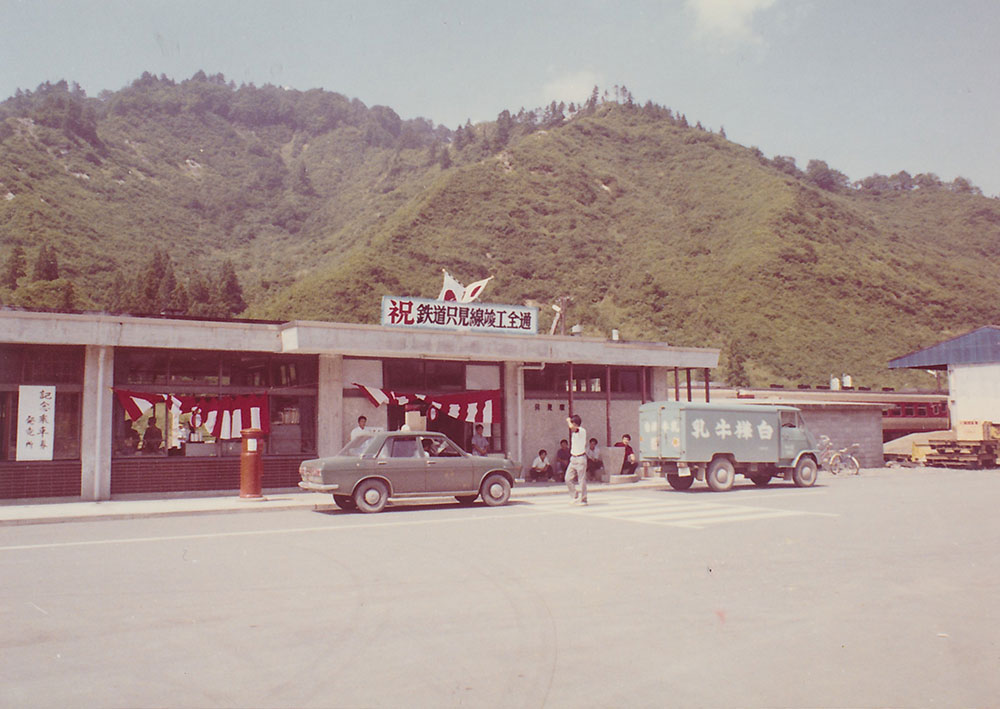
August 20Ownership was transferred from Electric Power Development Co., Ltd., and the 27.6 km section between Aizu-Kawaguchi and Tadami Stations opened. The stations of Aizu-Yokota, Aizu-Gamo, and Tadami were newly established.
 |
|
| 1965 (Showa40) |
July 15The Kuromatagawa temporary boarding point was closed.
|
| 1971 (Showa46) |
August 29The line was extended with the opening of the 20.8 km section between Tadami and Oshirakawa Stations. The section from Aizu-Wakamatsu to Tadami was separated from the Aizu Line and integrated into the "Tadami Line," creating a total length of 135.2 km between Aizu-Wakamatsu and Koide. Additionally, Tagokura Station was newly established. November 4Steam locomotive services were discontinued between Koide and Oshirakawa Stations on the Niigata Prefecture side. 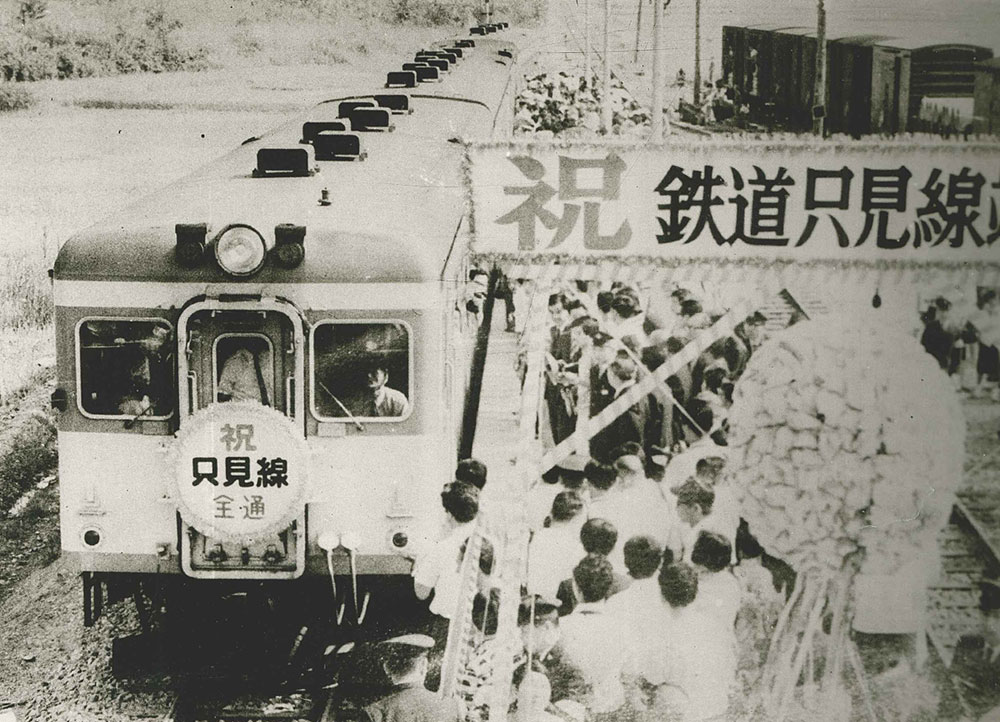 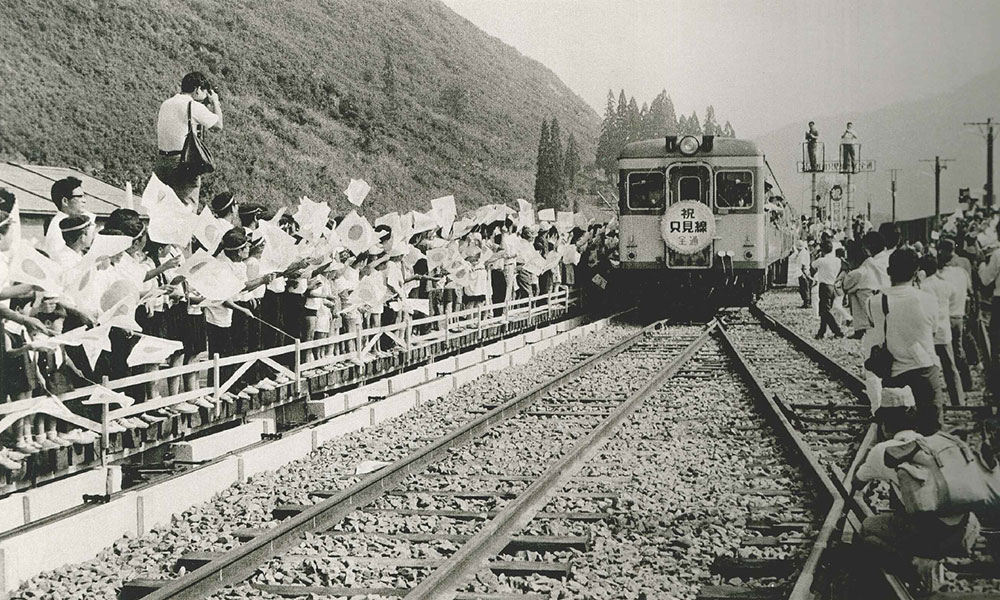 |
|---|---|
| 1974 (Showa49) |
November 1Steam locomotive services on the Fukushima Prefecture side were discontinued. |
| 1987 (Showa62) |
April 1With the privatization of the Japanese National Railways (JNR), the East Japan Railway Company (JR East) succeeded the operations. |
| 2001 (Heisei13) |
October 16The "SL & DL Aizu-Tadami" made a special run to commemorate the 30th anniversary of the full opening of the line. December 1Tagokura Station was redesignated as a seasonal temporary station. |
| 2004 (Heisei16) |
October 23The Niigata Prefecture Chuetsu Earthquake occurred. |
| 2011 (Heisei23) |
March 11The Great East Japan Earthquake occurred. July 27 – 30The Tadami Line sustained damage due to the Niigata-Fukushima torrential rains. The No. 5, 6, and 7 Tadami River Bridges were washed away between Aizu-Kawaguchi and Aizu-Oshio, and the track bed was washed out between Aizu-Sakamoto and Aizu-Yanaizu. As a result, service was suspended between Aizu-Bange and Koide. August 7Service resumed between Aizu-Bange and Aizu-Miyashita. August 11Service resumed between Oshirakawa and Koide. December 3Service resumed between Aizu-Miyashita and Aizu-Kawaguchi. |
| 2012 (Heisei24) |
October 1Service has resumed between Tadami and Oshirakawa. As a result, the section between Aizu-Kawaguchi and Tadami remains suspended (substitute bus service is available). |
| 2013 (Heisei25) |
March 16Tagokura Station has been closed. Additionally, Kakinoki Station has been changed to a temporary station. May 21JR East announced that the restoration costs for the section between Aizu-Kawaguchi and Tadami stations would be approximately 8.5 billion yen and that construction would take more than four years. November 10The JR Tadami Line Recovery Promotion Council—composed of Fukushima Prefecture, 17 municipalities in the Aizu region, Niigata Prefecture, Uonuma City, and related organizations—was established to strengthen cooperation for the restoration and recovery of the line and to discuss measures for promoting its utilization. From then until 2017, Fukushima Prefecture and relevant municipalities developed utilization plans and held community meetings for residents along the line. |
| 2015 (Heisei27) |
March 15Kakinoki Station was permanently closed. |
| 2016 (Heisei28) |
December 26Fukushima Prefecture and the municipalities along the line adopted a policy to restore the railway using the "Separation of Infrastructure and Operation" (Joge-Bunri) system. |
| 2017 (Heisei29) |
March 27At the Fukushima Prefecture JR Tadami Line Recovery Promotion Council, a restoration policy based on the "Separation of Infrastructure and Operation" system was decided as the local consensus, and a memorandum of understanding was signed between Fukushima Prefecture and the 17 municipalities of the Aizu region. June 19Fukushima Prefecture and JR East reached an agreement to restore the section between Aizu-Kawaguchi and Tadami as a railway using the "Separation of Infrastructure and Operation" system. |
| 2018 (Heisei30) |
June 15The groundbreaking ceremony for the railway restoration work was held by JR East in Kaneyama Town, and construction began with the goal of completion within fiscal year 2021. 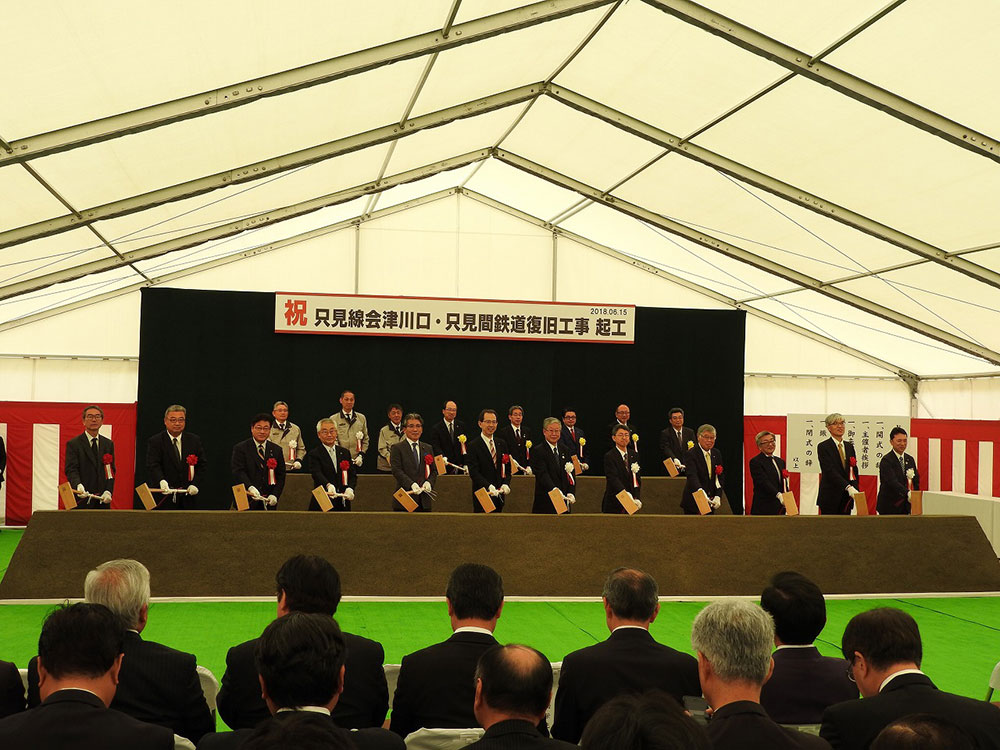
Groundbreaking Ceremony 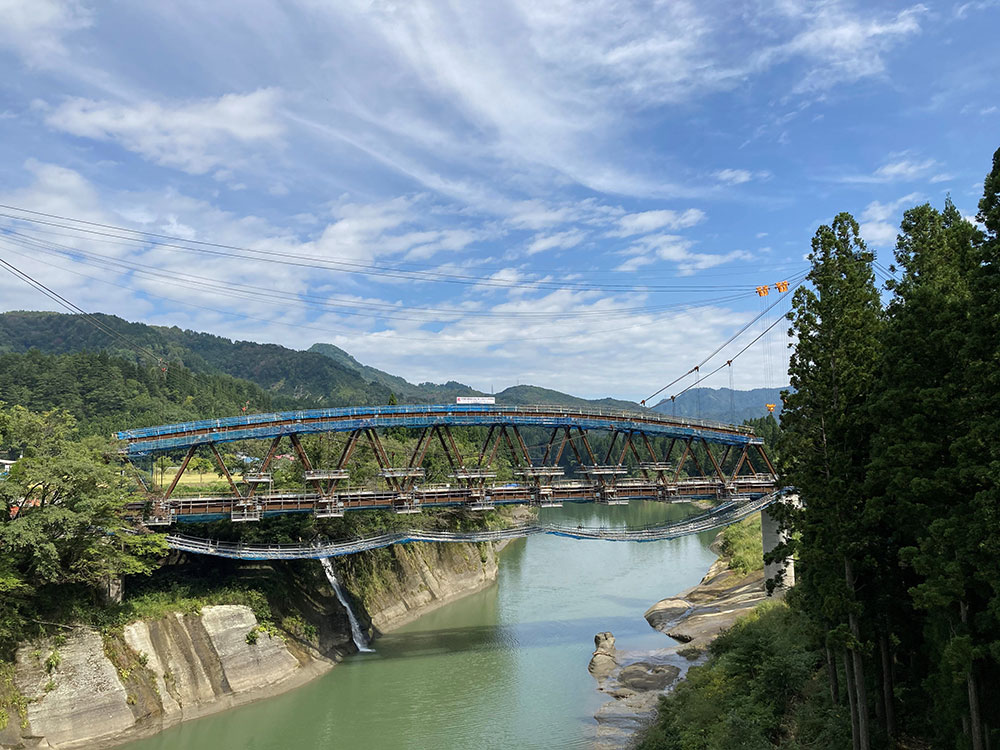
Restoration Work (The No. 7 Tadami River Bridge) |
| 2020 (Reiwa2) |
March 14Following a schedule revision, the Kiha E120 series trains began operating between Aizu-Wakamatsu and Aizu-Kawaguchi stations. July 12The Kiha 110 series trains began operating between Tadami and Koide stations. August 26JR East announced that the completion of construction is expected to be in the first half of fiscal year 2022 due to changes in the construction method for the Sixth Tadami River Bridge. The company also stated its goal to resume operations within the year 2022. 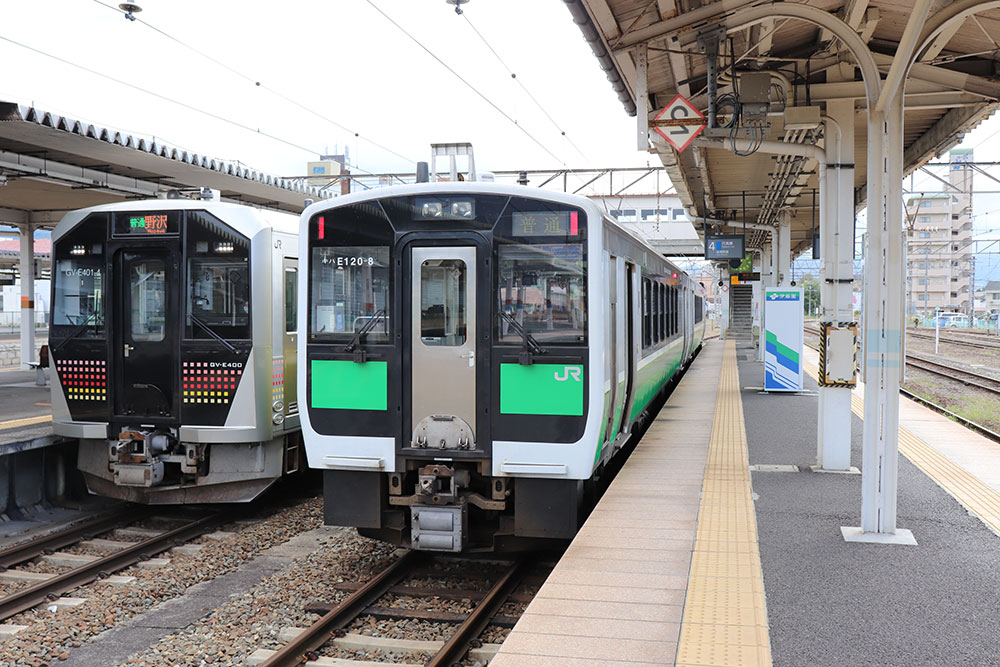
KiHa E120 series 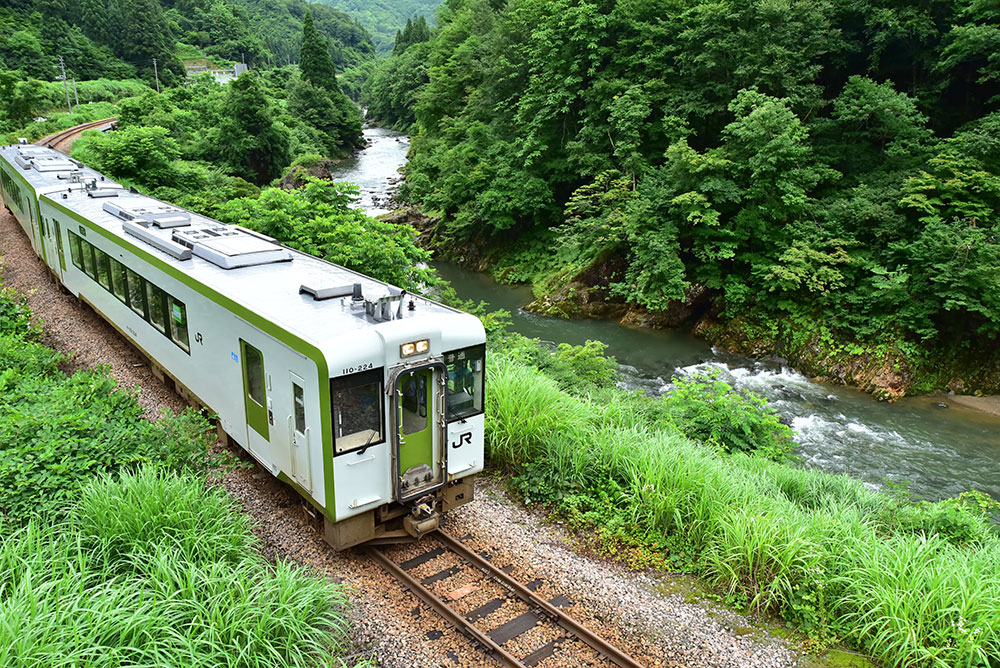
KiHa 110 series |
| 2021 (Reiwa3) |
July 10The Aizu Railway "Oza-Toro Tenbo" (Observation) Train operated between Aizu-Wakamatsu and Aizu-Kawaguchi stations. This marked the first time the train entered the section between Nishi-Wakamatsu and Aizu-Kawaguchi. August 29The Tadami Line celebrated its 50th anniversary of full-line operation. To commemorate this milestone, the "Tadami Kairi" train operated between Koide and Tadami stations. September 17The group of 17 Tadami Line railway facilities was designated as a "Recommended Civil Engineering Heritage" by the Japan Society of Civil Engineers (JSCE). 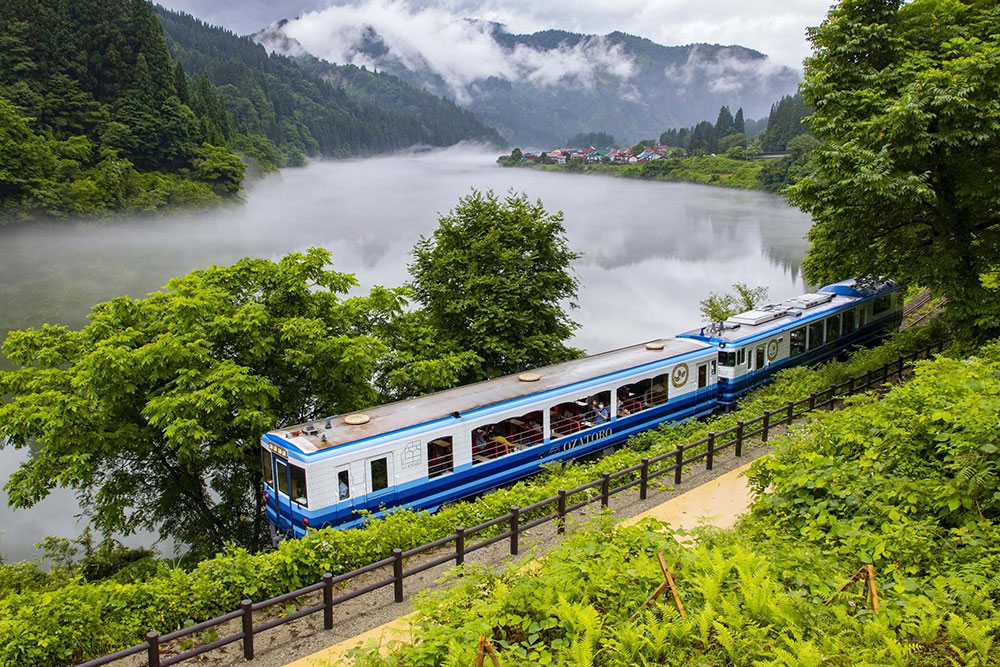
Oza-Toro Tenbo Train 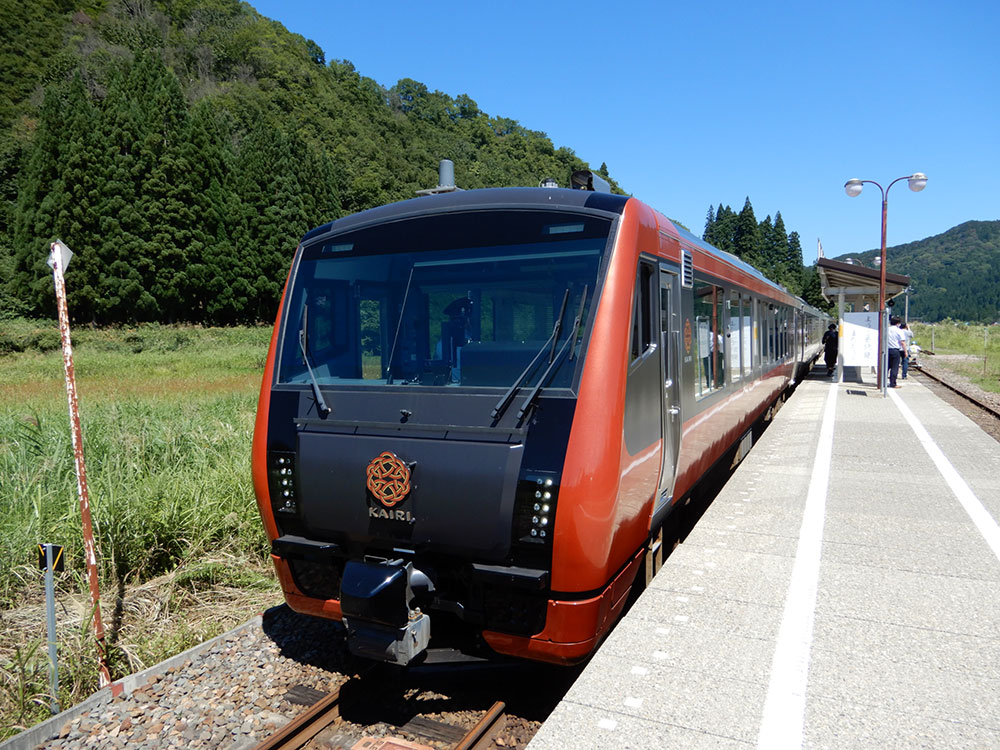
Tadami Kairi |
| 2022 (Reiwa4) |
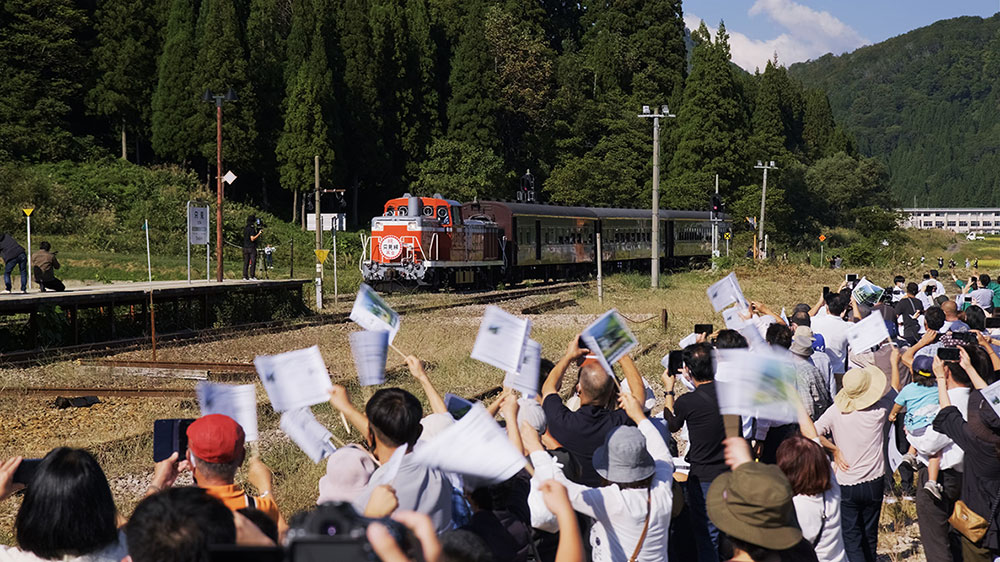
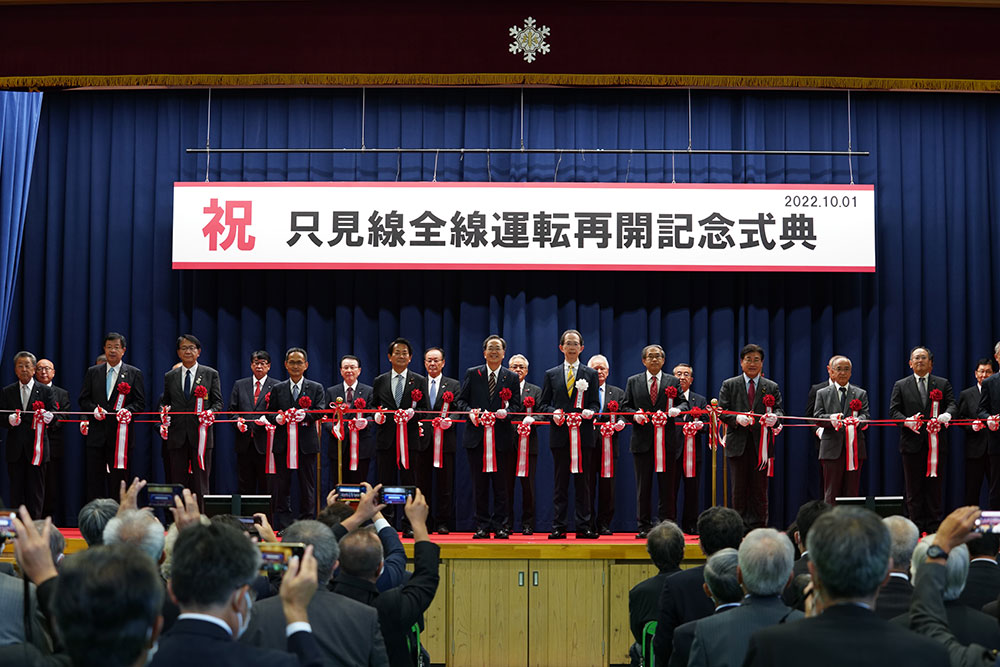
October 1Full service resumed on the entire line.
|
*All information on this website, including photographs and text, is protected by copyright. Unauthorized reproduction or duplication is strictly prohibited.